

A clearer kind of clean. Independent choices. Everyday kitchen confidence.
Rinse & Rack

PRODUCT GUIDE

Commercial dishwasher buying guide

For a restaurant or other regulated kitchen, begin with the required workflow and local approval process. A residential dishwasher with a sanitize cycle is not a substitute for equipment specified for a commercial food-service operation.

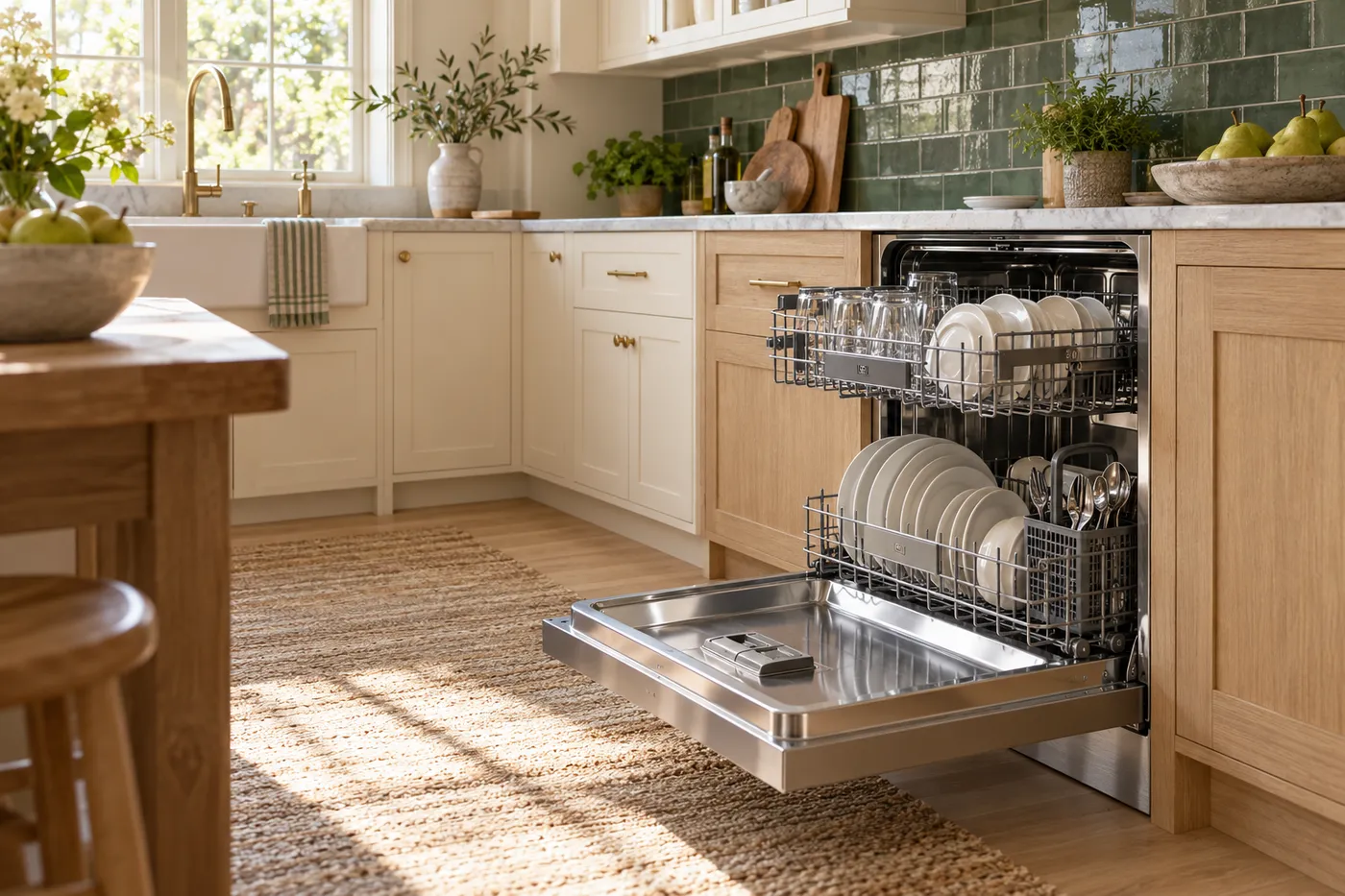
Open dishwasher in a bright green-and-oak kitchen

As an Amazon Associate I earn from qualifying purchases.

CHOOSE FOR YOUR ROUTINE

Products worth a closer look.

Choose the format around throughput

An under-counter machine may suit a small operation with limited space; a door-type or conveyor arrangement serves a different volume and handling pattern. Define the items being washed, peak rack demand, incoming dirty-dish area and clean storage before comparing equipment.

Plan the whole process, including scraping, pre-rinsing where required, loading, unloading and drying. A machine’s advertised rack rate is less useful when the layout prevents staff from feeding or clearing it efficiently.

Sanitation and utilities need exact specifications

NSF distinguishes residential dishwasher certification from the commercial warewashing standard, NSF/ANSI 3. Check the exact machine’s certification and the sanitizing method required for your operation. High-temperature and chemical-sanitizing arrangements need different supporting equipment and monitoring.

Have the installer and relevant authority review electrical supply, drainage, incoming water, ventilation and any booster or chemical-dosing requirements. Do not buy a commercial unit because its external dimensions resemble a domestic opening.

Questions for a supplier

  • What is the demonstrated capacity for our rack and item mix, including peak periods?
  • Which utility, exhaust and water-treatment requirements are mandatory for this exact model?
  • What chemicals or booster equipment are required, and who supplies and maintains them?
  • How are sanitation conditions checked and recorded under our local requirements?
  • Who provides service, replacement parts and staff training?
  • Does the quote include the tables, racks, delivery, commissioning and all connection work?

The product assessments.

01For a commercial high-temperature station
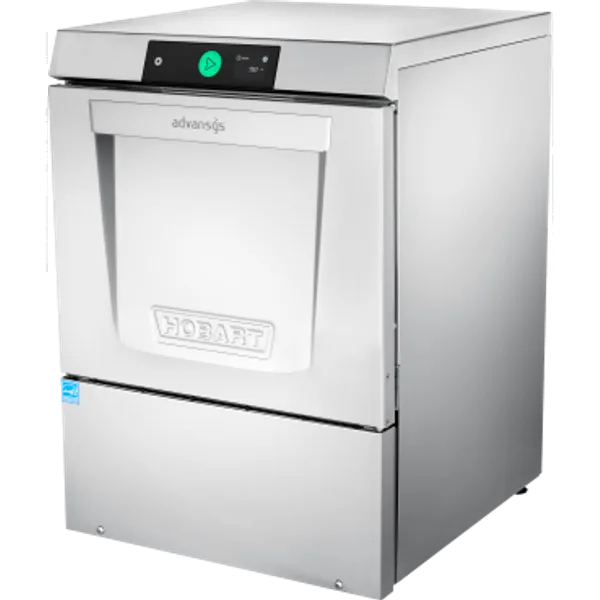
Hobart LXnR Advansys
Commercial undercounterHobart

Commercial undercounter

Hobart LXnR Advansys

A specialist commercial dishwasher with energy recovery and an optional second-level rack system.

The LXnR is a commercial shortlist option for an operator who needs repeated rack washing through a service period. It should be compared with other commercial equipment on throughput, utilities and support.

Hobart’s headline 48 racks per hour requires its optional second-level rack kit. The manufacturer lists lower single-level throughput and different rates by cycle, so size the station around the ware and wash program you actually need.

Why consider it

  • Energy recovery
  • NSF pot-and-pan-rated cycles
  • Chemical pumps with automatic priming

Consider before buying

  • Commercial utilities and installation required
  • 48-rack figure needs optional second-level kit
  • Throughput varies with selected cycle and handling
Specifications, contents & buying checks
Sanitizing
High temperature
Door opening
17 in
Rated throughput
30 light / 24 normal / 13 heavy racks per hour
With optional second level
Up to 48 racks per hour
Water
0.62 gal per cycle, manufacturer rating
Electrical
Configuration-specific 208–240 V options; dealer must verify phase and service

Contents & use

  • Second-level rack kit is optional.
  • Have the dealer list the racks and connection items included with the exact configuration.

Before you buy

  • Have a commercial dealer survey electricity, water, drainage and local requirements.
  • Match the voltage and phase on the order to the site.
  • Include racks, chemicals, commissioning and service in the quotation.

Good questions.

Can a home dishwasher be used in a commercial kitchen?

Do not assume so. Confirm equipment and sanitation requirements with the authority responsible for the operation before buying or installing a machine.