

A clearer kind of clean. Independent choices. Everyday kitchen confidence.
Rinse & Rack

PRODUCT GUIDE

Choosing an energy-efficient dishwasher

Choose an efficient dishwasher by checking the exact model’s ENERGY STAR listing and EnergyGuide label, then matching capacity to your usual load. A smaller appliance does not necessarily use less energy over a week if it needs more cycles.

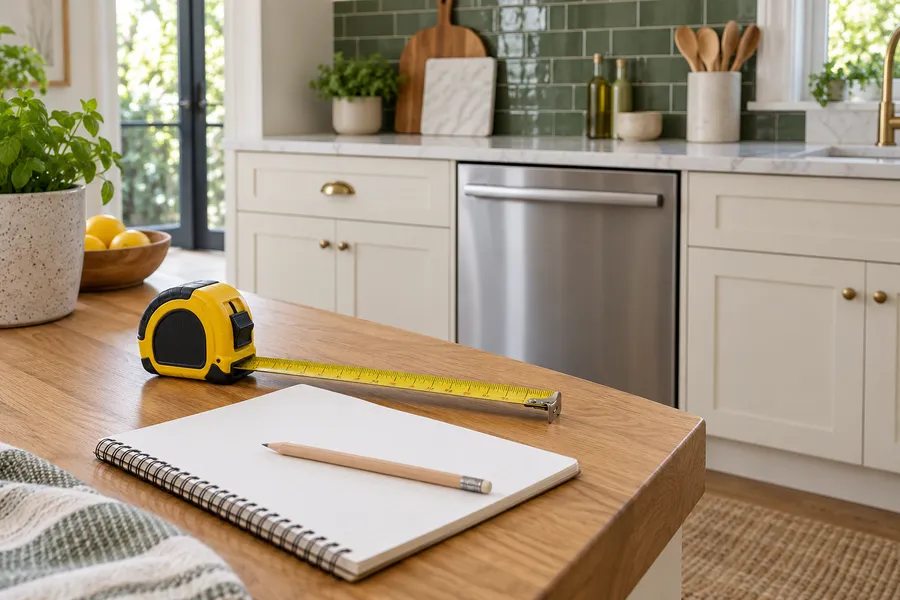
Measuring tape and notebook beside a dishwasher

As an Amazon Associate I earn from qualifying purchases.

CHOOSE FOR YOUR ROUTINE

Products worth a closer look.

Read the labels together

ENERGY STAR identifies qualifying efficiency performance. The yellow EnergyGuide label provides a standardized comparison and an estimated operating cost under stated assumptions. Use those assumptions to compare similar machines; do not treat the printed dollar figure as your utility bill.

Record annual energy use, water use where available, model number and capacity. Make sure you are looking at the US model rather than a similarly named appliance assessed under another country’s system.

Capacity changes the calculation

A countertop machine can make sense for a small daily load, but running several compact cycles to replace one full-size load changes the result. Equally, buying a large machine only to run it nearly empty may not suit your routine.

Think through a representative week: breakfast dishes, cooking equipment, lunch containers and weekend loads. Choose a rack arrangement that fits these items without blocking the spray. Useful capacity is more valuable than an impressive place-setting number that does not match your dishes.

Efficiency after purchase

Use the appropriate normal or sensor program for ordinary loads and reserve extra heat for the situations that need it. Scrape solids rather than making every plate spotless under a running tap. Keep the filter and spray paths clear.

If your electricity tariff changes by time of day, calculate the savings from shifting a load using your actual rates. A timer changes when energy is used; it does not by itself make a cycle consume less. Compare estimated savings with convenience, noise and household safety.

The product assessments.

01Our pick for most households
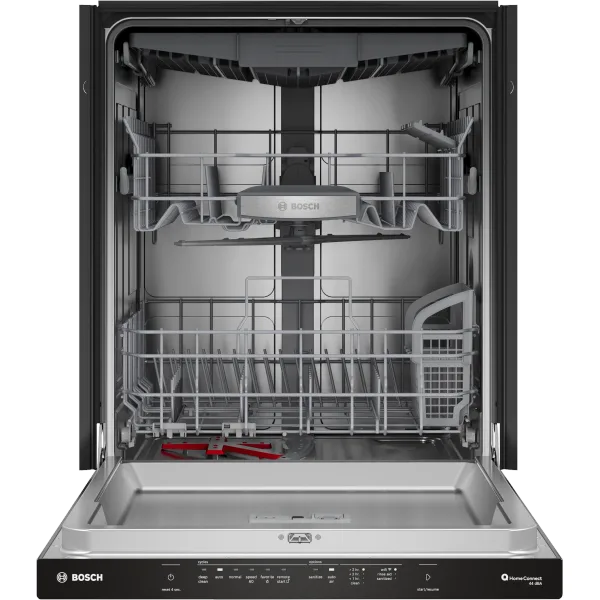
Bosch SHP65DM5N
Built-in44 dBA

Built-in

Bosch SHP65DM5N

Our research-based starting point for a standard kitchen: AutoAir drying, a third rack and a focused Zone Wash area.

For a conventional 24-inch opening, the current Zone Wash 500 Series is our research-based starting recommendation. It combines an adjustable upper rack, a utensil tray and automatic door-opening drying.

AutoAir releases the door during drying. That makes its installation position worth considering in a narrow walkway or a home where a partly open door would be inconvenient.

Why consider it

  • Automatic drying-door release
  • Adjustable upper rack and separate utensil tray
  • Zone Wash focus area and Deep Clean cycle

Consider before buying

  • Some extra options require Home Connect
  • No integrated water softener
  • Door opens during AutoAir drying
Specifications, contents & buying checks
Width
23 9/16 in
Height
33 7/8 in minimum
Depth
23 3/4 in
Noise
44 dBA
Capacity
16 place settings
Drying
AutoAir
Electrical
120 V / 60 Hz; 12 A appliance rating
Third rack
Standard third rack

Contents & use

  • Power cord, pre-connected drain hose and toe-kick; cabinet protective guard shown in specification.
  • Water supply kit and hardwire junction box are optional extras.

Before you buy

  • Allow room for the automatic door opening.
  • Check cabinet moisture protection and the installation manual.
  • Compare the installed quote with the 800 Series before buying.
02Our front-control choice
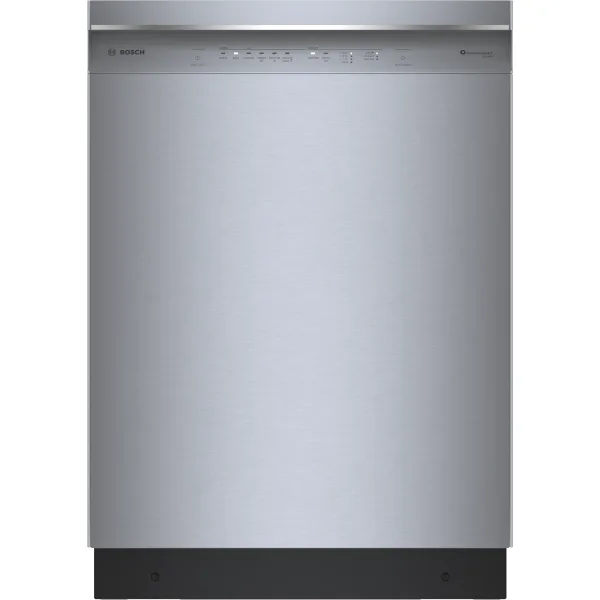
Bosch SHE53C85N
Built-in46 dBA

Built-in

Bosch SHE53C85N

A straightforward Bosch option for shoppers who prefer a visible control panel.

The SHE53C85N suits shoppers who value accessible, visible controls over a concealed panel. We would shortlist it when its installed quote is meaningfully below the 500 Series.

PureDry is the drying system specified for this model. A seller’s generic Bosch description is not a reason to expect AutoAir or CrystalDry.

Why consider it

  • Visible front controls
  • Third rack
  • Stainless-steel tub

Consider before buying

  • No AutoAir or CrystalDry
  • 46 dBA rating is higher than the 500 and 800 picks
  • No built-in softener
Specifications, contents & buying checks
Width
23 9/16 in
Height
33 7/8 in minimum
Depth
23 3/4 in
Noise
46 dBA
Capacity
16 place settings
Drying
PureDry
Electrical
120 V / 60 Hz; 12 A appliance rating
Third rack
Yes

Contents & use

  • Three-prong cord, pre-connected drain hose and toe-kick.
  • Hardwire junction box sold separately.

Before you buy

  • Decide whether visible controls suit your kitchen.
  • Do not assume all 300 Series models have identical features.
  • Budget for the appropriate supply connection.
03Our narrow-space shortlist
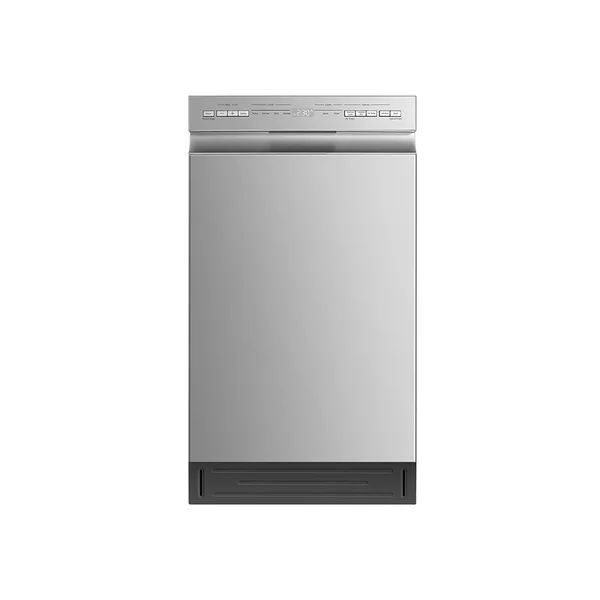
Midea MDF18A1AST
18-inch built-in52 dBA

18-inch built-in

Midea MDF18A1AST

An eight-place-setting option for a kitchen that cannot accommodate a full-width machine.

Choose an 18-inch machine because the room requires it, not because the smaller appliance will necessarily be cheaper to own. Frequent cooking may mean more loads.

This Midea offers a practical narrow format and a heated-dry option. We would check it first for a modest-size kitchen with a permanent dishwasher opening.

Why consider it

  • Narrow built-in format
  • Heated-dry option
  • Front controls

Consider before buying

  • Smaller capacity
  • 52 dBA declared noise
  • Manufacturer rack descriptions conflict
Specifications, contents & buying checks
Width
17 3/4 in
Height
32 1/2 in
Depth
22 1/2 in
Noise
52 dBA
Capacity
8 place settings
Drying
Heated Dry option
Electrical
120 V / 60 Hz
Third rack
No, per current specification table

Contents & use

  • Installation brackets and screws, condensation strip, adjustment caps, drain-hose cable tie and adjustable toeplate are listed in the installation instructions.
  • Supply line, elbow, electrical connection materials and any required drain fittings are separate.

Before you buy

  • Ask for confirmation of rack adjustability on the exact supplied unit.
  • Measure the opening using installation requirements, not appliance dimensions alone.
  • Confirm included connection hardware before ordering.

Good questions.

Is the shortest cycle the cheapest to run?

Not necessarily. A quick program can use different heat or water settings. Compare the cycle information in the manual rather than elapsed time alone.