

Prepare the parts
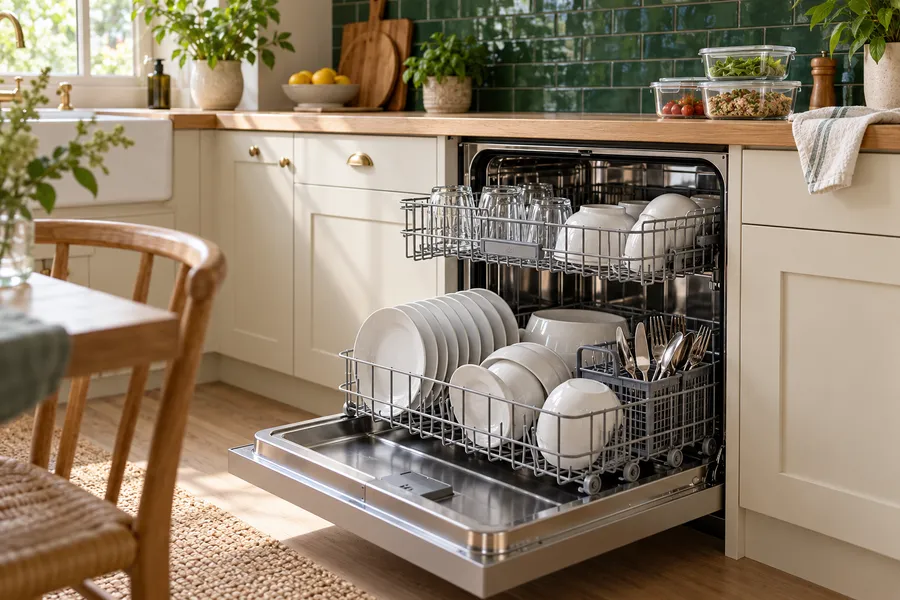
CDC advises separating bottle components and rinsing them before machine cleaning. Keep small dishwasher-compatible pieces contained so they cannot fall into the machine’s filter. Follow each bottle maker’s instructions for valves, nipples, seals and rack placement.
Check the basket or holder for compatibility and space parts so water reaches them. A closed or partly assembled bottle is not equivalent to exposed cleanable surfaces.
Choose the appropriate process
CDC recommends hot water and a heated drying cycle or sanitizing setting when possible. Its guidance states that a separate sanitizing step is not necessary when that dishwasher process is used. Follow the linked CDC instructions, especially for babies under two months, those born prematurely or those with weakened immune systems.
A product’s baby-care or steam label alone does not establish the same process. Check the dishwasher’s actual cycle instructions and the feeding-item maker’s heat limits. If the requirements conflict, use the approved alternative method.
Dry and store carefully
Wash hands before handling cleaned parts. Let any remaining moisture air-dry thoroughly in a clean protected place before storage; CDC advises against rubbing items dry with a dish towel. Reassemble according to the product instructions and inspect for wear or damage.
When buying a dishwasher, consider a compatible small-item basket, useful rack space and a documented sanitizing option. Those practical features are more informative than assuming one brand is inherently best for baby bottles.