

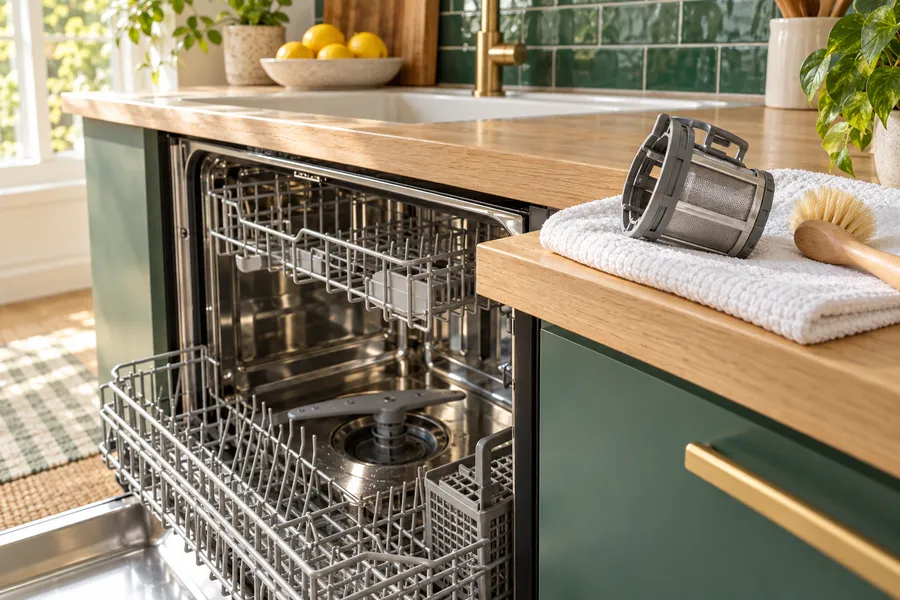
Start with safe observations
Note the error message, whether the cycle completed and whether the sink also drains slowly. If water is leaking or reaching electrical areas, stop use and isolate the appliance safely. Do not keep running cycles in the hope that a blockage clears.
Check the accessible filter for food debris using the manufacturer’s procedure. Let hot water cool and watch for broken glass. Avoid reaching blindly into a pump or removing parts the manual does not identify as owner-serviceable.
Consider installation changes
A problem immediately after installation can involve the drain connection or hose routing. A recently replaced disposal or altered plumbing is relevant information for the installer. Have the installer verify the required connection, hose height and any air-gap arrangement.
Look only for visible kinks or crushing without pulling out a connected machine. Moving a built-in can strain water and electrical connections and may require professional work.
Avoid the wrong fix
Do not pour household drain-opening chemicals into the dishwasher. A dishwasher cleaner is also not a substitute for correcting a blocked drain or failed pump. Follow the exact reset or drain procedure only if the manual instructs it.
If the safe visible checks do not solve the issue, contact authorized service and report the model, code and installation history. Keeping that information together can prevent repeated, unproductive troubleshooting.