

Nominal size is a category
A dishwasher described as 24-inch is not necessarily exactly 24 inches wide. Manufacturer drawings distinguish the appliance body, the required opening and the space occupied by an open door. Those numbers answer different questions.
For example, the Bosch SHP65DM5N body is 23 9/16 inches wide. That figure should not be used as its required cabinet cutout. Download the exact drawing and have the installer confirm it against the finished opening.
Record more than one measurement
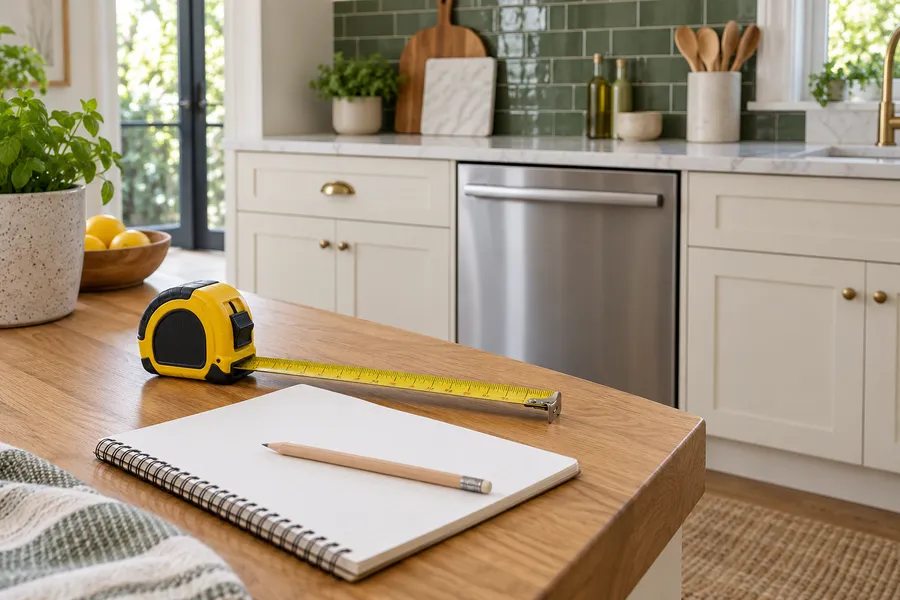
Measure the width near the front and back and at different heights. Measure floor-to-counter clearance across the opening, including any leveling range the appliance requires. A tiled floor laid after the old dishwasher was installed can make removal more difficult than installation originally was.
Depth needs to include pipes, fittings, hoses and electrical placement. Also check the clearance between the open door and an island or opposing cabinet. A machine that slides into the opening can still leave an uncomfortable loading space.
Special formats add special checks
A panel-ready machine needs the specified furniture-panel dimensions, weight and attachment layout. A drawer model has a different opening movement. A countertop machine needs space above or around it for filling, connections and ventilation according to its instructions.
For a rolling portable model, measure both its storage position and the route to the sink. Check the faucet connection and door-open working space. Choosing the narrowest body does not solve an incompatible faucet or an obstructed walkway.
Keep a simple fit record
Write down the narrowest opening dimensions, door clearance, connection positions, floor changes and your largest plate diameter. Photograph the opening for the installer. Ask for written confirmation before ordering cabinetry or a custom panel that cannot easily be returned.