

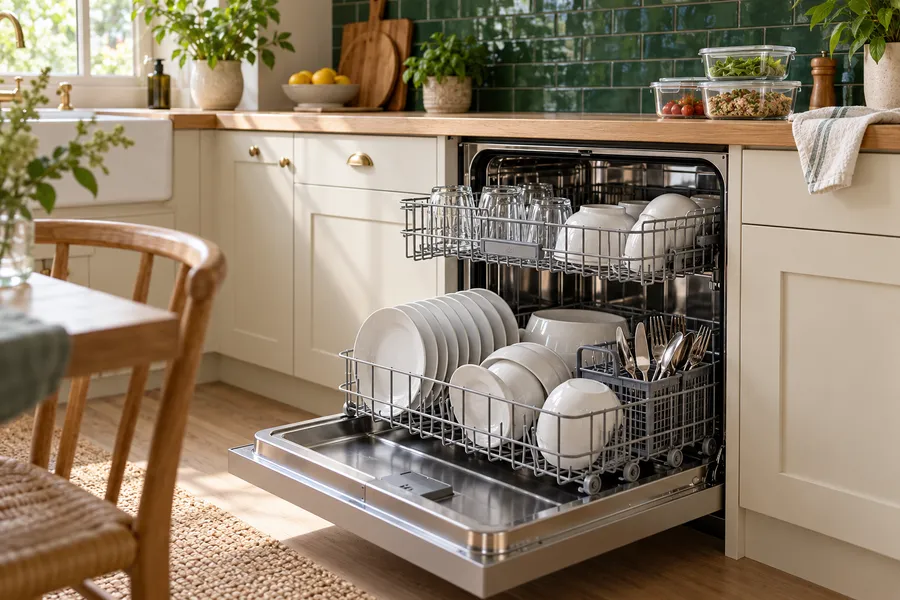
Start with the rack diagram
Use the diagram for your machine rather than assuming every rack works the same way. Place items securely, separate bowls that would nest and angle cups or containers to avoid collecting water. Keep tall pans away from the dispenser door.
Before starting, turn accessible spray arms gently to check clearance. A utensil poking through a basket or a handle extending above a rack can obstruct movement even when the door closes normally.
Use adjustments deliberately
Raise or lower a rack only as instructed and check what the adjustment does to both levels. Making room for a tall plate below can remove the clearance needed for a glass above. Foldable tines help when they support the new load securely; they are not permission to stack cookware.
Use the third rack for the items it is designed to hold. Arrange flatware so pieces do not lie tightly against one another, and place sharp items according to the machine’s safety instructions.
Prepare and unload sensibly
Scrape off substantial food remains instead of washing every ordinary dish clean at the sink. Special items, including infant feeding equipment, have their own preparation and hygiene guidance. Check dishwasher compatibility before loading unfamiliar materials.
Let the cycle and drying stage finish. When unloading a conventional arrangement, taking the lower rack first helps avoid dripping water from above onto already dry dishes. Reposition items that repeatedly retain puddles rather than blaming detergent alone.